Preserving Chillies

Using your harvest

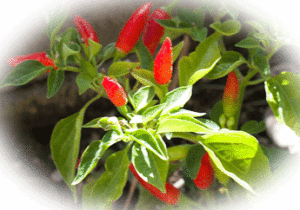
As Chillies ripen swiftly across the United Kingdom, you might soon find yourself facing an abundance of these fiery gems. It’s time to ponder their fate. As the seasons shift and your garden or local market bursts forth with these vibrant, fiery wonders, you may be contemplating how to maximize this bountiful harvest.

The allure of Chillies extends beyond their vibrant colours and spicy charisma; it lies in their transformative power, turning ordinary dishes into extraordinary culinary creations. They are the dynamic ingredient capable of elevating a bland meal to a taste sensation, and a chilly evening into a warm and spicy adventure.
Chillies are more than mere food; they represent a cultural phenomenon that spans the globe, from the fiery curries of India to the zesty salsas of Mexico. Whether you relish their fiery heat, savour the nuanced flavours they impart, or simply admire their vibrant hues, one thing remains undeniable: Chillies are a culinary treasure worth preserving.

In this comprehensive guide, we embark on a journey to unlock the art of preserving Chillies, ensuring that you have this versatile ingredient at your fingertips throughout the year. From drying and freezing to pickling and infusing, we’ve assembled a diverse array of techniques to help you relish the zestful essence of Chillies long after the harvest season has waned.

Read more

The use of Chillies in Hawaii

Hawaiian Chillies

In the heart of Hawaii, a place known for its breathtaking landscapes and vibrant culture, lies a culinary treasure concealed amid paradise’s beauty: Hawaiian Chillies, locally celebrated as Hawaiian Chile Peppers. These petite yet potent wonders have made an enduring impact on the islands’ cuisine, a testament to the depth of Hawaii’s rich culinary heritage.

The exact beginnings of Chillies in Hawaii are veiled in the mists of time, a culinary mystery that tantalizes the taste buds and the imagination. While precise records remain elusive, a prevailing belief suggests that these fiery Chillies found their way to the islands during the late 18th or early 19th century. It was a time when European explorers and Asian traders and settlers embarked on journeys that would forever transform the Hawaiian culinary landscape.


Chillies, with their roots tracing back to the native soils of the Americas, embarked on a globe-spanning odyssey. Their voyage, propelled by the exchange of goods and cultures among early visitors, brought them to the Pacific archipelago of Hawaii. These peppers, initially native to distant lands, found a new home amidst the azure waters and lush landscapes of the Hawaiian islands.

Hawaii’s evolution into a bustling hub of trade and cultural exchange during the 18th and 19th centuries fostered a culinary tapestry woven with diverse influences. Within this gastronomic mosaic, a multitude of ingredients, including Chillies, found their place in the heart of Hawaiian cuisine. The Chinese and Filipino immigrants, among other cultural contributors, wielded profound influence in shaping the flavours that would define Hawaiian culinary traditions. Their culinary wisdom melded harmoniously with the heat of these imported Chillies, giving rise to a unique fusion of tastes that would captivate palates for generations.

Read more

Vegetarian Pizza

Spicy and nice

Embark on a gastronomic journey crafting a vegetarian masterpiece – the timeless classic, vegetarian pizza. With pre-purchased pizza bases as our canvas, we blend flavours harmoniously, orchestrating a medley of tastes that delight the palate.

At the heart of our culinary creation lies the rich tapestry of tomato sauce, providing the perfect foundation for this savoury delight. Melted mozzarella embraces the pizza, creating a comforting familiarity with each gooey bite.

But the adventure doesn’t end there; it flourishes as we adorn our pizza with an array of fresh vegetables. Juicy tomatoes, vibrant bell peppers, and hearty mushrooms offer a burst of colour and flavour, elevating the pizza’s texture to new heights. Tangy onions add a delightful sweetness, while sunny kernels of sweetcorn provide a contrast of natural goodness.

For those seeking an extra kick, dashes of fiery green chillies awaken the senses, turning up the excitement with every mouthful.

Join us on this delectable adventure as we unlock the secrets to creating a pizza that embodies the artful composition of vegetarian bounty. Let your culinary creativity soar and indulge in the joy of crafting the ultimate vegetarian pizza. So, don your aprons and let the symphony of flavours begin!

Read more

How to encourage fruit set

Improving yields

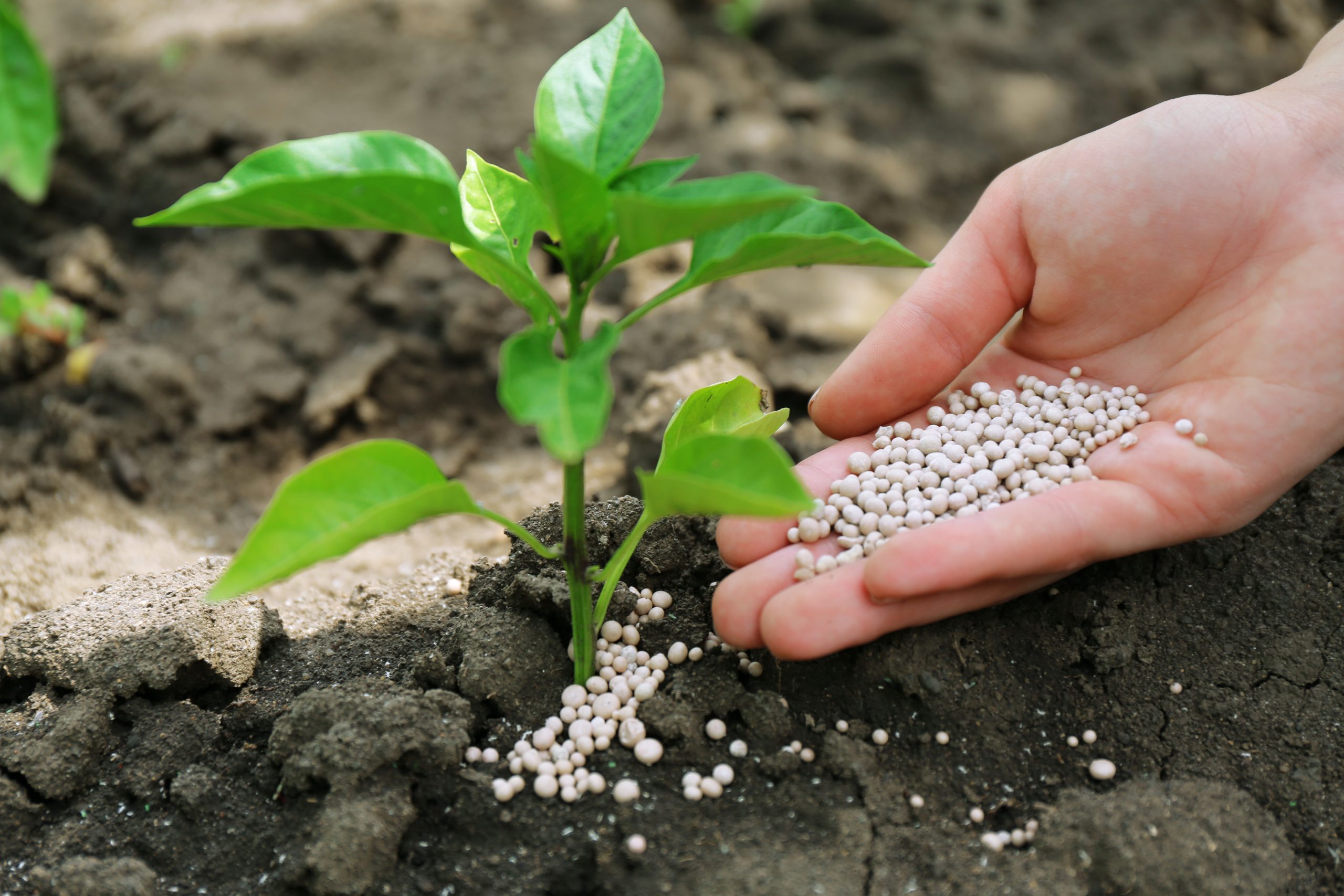
An essential element for encouraging fruit set  is phosphorous. Phosphorus, along with nitrogen and potassium, constitutes one of the three primary nutrients that plants require for optimal growth. Its significance lies in its vital role in various plant processes, including energy transfer, photosynthesis, and the synthesis of DNA and RNA. However, when considering chilli plants and their flowering stage, phosphorus takes centre stage due to its specific importance.
During the flowering phase, chillies undergo a remarkable physiological transformation. They redirect their resources from leaf and stem development towards the production of captivating flowers, which ultimately give rise to the formation of delectable fruits. This transition necessitates an ample supply of phosphorus to support the intricate metabolic processes involved in flower initiation and development. Phosphorus acts as a key player in the biochemical reactions responsible for the formation of floral structures, including the differentiation of reproductive tissues and the generation of vibrant petals.

Furthermore, phosphorus plays a crucial role in regulating the timing and intensity of flowering in chilli plants. It influences the expression of flowering-related genes and the synthesis of floral hormones, thereby influencing the plant’s ability to undergo successful flowering.

Read more

Chilli Seedlings not growing. Stunted growth.

Distorted growth

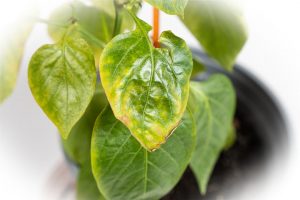
I have a batch of chilli seedlings that are not thriving as well as the others I planted at the same time. They are small and exhibit stunted growth, showing signs of various nutrient deficiencies. These deficiencies include yellowing at the leaf edges (leaf margin chlorosis) and browning at the tips of the leaves. To address this issue, I have decided to conduct an experiment using a multi-pronged approach.

Considering that the stunted growth could be attributed to various factors such as seed viability, watering, lighting, pests (like aphids), and the mentioned nutrient deficiencies,I will systematically tackle each potential obstacle to promote healthier growth in these plants.

While there is not a lot I can do if the initial problem was seed viability I will do everything I can to see if it is possible to address the other potential causes

Firstly, I will ensure that the plants are free of aphids. I plan to wash them thoroughly and apply an aphid treatment to keep them aphid-free for a while.

Next, I will change the potting soil, making sure the pH falls between 5 and 6, as Chilli plants prefer slightly acidic soil. Alongside this, I will treat the seedlings’ roots with an inoculant of mycorrhizal fungi, which can enhance nutrient uptake by establishing a beneficial relationship with the plant roots. In this way, I hope that the plants will rapidly absorb the nutrients I will be feeding them and go on to recover and become healthy plants

Read more

How to improve chilli plant growth

Let’s make it happen!

Are you eager to witness your chilli plants thrive and produce an abundant harvest of fiery Chillies in record time? If so, you’ve come to the right place! In this blog post, we will explore effective strategies and time-tested techniques to help you make your Chilli plants grow faster. Whether you’re a seasoned gardener or a beginner with a green thumb, these tips and tricks will give your Chilli plants the boost they need for accelerated growth and optimal productivity.

In the following sections, we will delve into various stages of Chilli plant growth, from seed germination to transplanting, and explore ways to optimize sunlight exposure, soil conditions, watering, fertilisation, , spacing, temperature management, indoor cultivation, and pest and disease control. By incorporating these best practices into your Chilli growing routine, you’ll be well on your way to maximizing the growth rate of your plants and enjoying a thriving Chilli garden.

So, if you’re ready to take your Chilli growing skills to the next level and witness impressive results, let’s dive in and discover the secrets to making your chilli plants grow faster. Get your gardening tools ready, put on your gardening gloves, and let’s embark on this exciting journey together!

Read more

Feeding Chilli plants

A well rounded program

When growing Chillies from seed to fruit in one season, it’s important to establish a well-rounded fertilisation program to provide the necessary nutrients for healthy plant growth and fruit production.

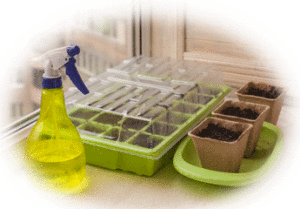
In the initial stage, when planting chilli seeds, no additional fertilization is required. The seeds contain sufficient nutrients for successful germination. Plant them in seed starting pellets, such as coco coir or a fertilizer-free seed starting potting mix.

Sow your Chilli  the seeds into your seed starting medium and add water. that is all that is required.Once the seedlings have germinated and developed their first true leaves (dicotyledons), they may require additional nutrients (albeit at very low levels). However, it is important to note that the seedlings can still sustain themselves from the stored nutrition in the seed endosperm. Fertilisation during this stage is not necessary, but if desired, use a diluted fertilizer solution at reduced concentrations to provide a gentle nutrient boost.

If you decide to go this route use a liquid fertiliser with an extremely low NPK.  It should be in the region of 1-1-2.  Fertilisers like this can be bought ready mixed or made by diluting products like Chilli Focus .   Another alternative is to dilute liquid tomato feed.

Read more

Pickling Chilli recipe

Pickling this years Chilli crop

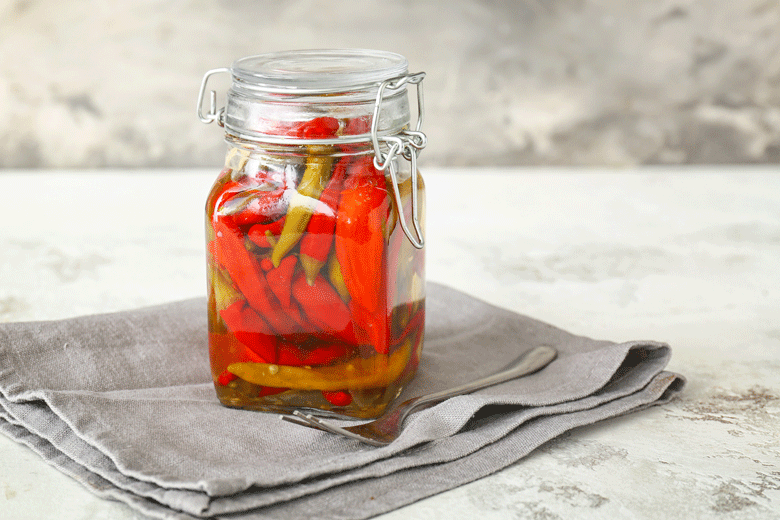
Today I made some pickled Chillies with a variety of Chillies that I harvested as part of this year’s Chilli crop. It is a good way of preserving Chillies and was  extremely easy to do. Having done this, besides pickling Chillies it now means that out of this years harvest I have been able to make Chilli powder, fermented Chillies and will shortly making hot sauce. I have also frozen quite a few.

All that I needed  for the pickling was the Chillies, some vinegar, water, sugar, salt, spices and the mason jars that I used to do the pickling.  I also needed a pot , a  cutting board and a sharp knife.

Once I had all of these together , the first step in the pickling process  was to sterilise the jars. I did this by washing them in warm soapy water and then rinsing them in fresh warm water, I then let them air dry.

Once this had been done, I placed them in an oven that I had preheated to 100 hundred degrees Celsius for ten minutes. This will have killed off any harmful bacteria. In addition to this, the use of vinegar in the  pickling process  helps to keep the Chillies free  from  air borne bacteria like Botulism. The acidity in vinegar deters the growth of Botulism spores which otherwise might have been a problem; as Chillies are not acidic in themselves

The next step was to remove the stalks from the three hundred grams of  mixed Chillies I was using  I then sliced them in half and packed them tightly into two mason jars. One jar is 500 millilitres and the other 350. In both instances the jars were filled to eighty percent of their total volume. I did this because it is essential that the Chillies are completely submerged in vinegar to prevent spoilage The only thing that was then needed was to make the pickling solution

Read more

Fermented Chilli sauce recipe

Fermented Chilli sauce

Fermented Chilli sauce

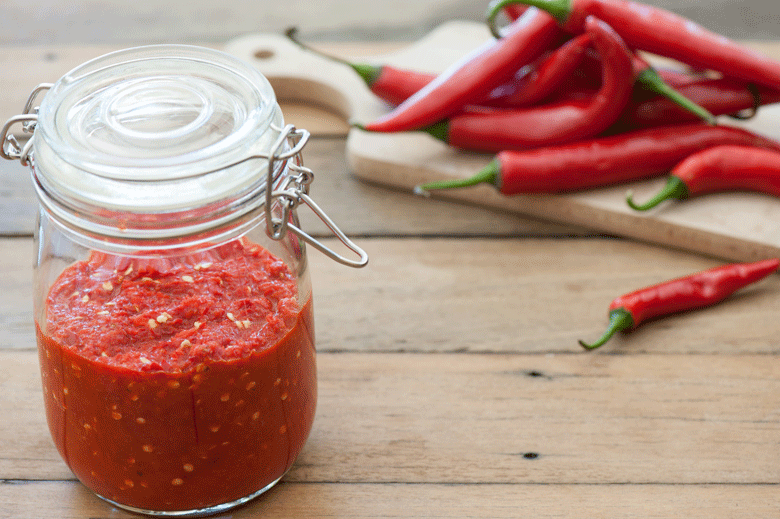
Last weekend I started making fermented Chilli sauce with part of my harvest of Aji Habaneros and Bishops Crowns. The Chillies are now starting to ferment, and I am now starting to see carbon – dioxide bubbles floating up from the fermentation brine. It has taken about three days to reach this point. In another four to five days the sauces will be ready, and I will then blitz them into a Chilli sauce.Fermented-vegetables

Fermentation is a great way to preserve Chillies, whether making a hot sauce or Chilli pickles. It is a method that has been used for thousands of years and was certainly being done before canning and bottling was invented.Recently, there has been renewed interest in this ancient form of preservation. This is because people have realised that the end- product tastes great and is also really healthy. What’s more, it’s easy to do

The basic principle behind fermentation is that you allow the Chillies to ferment in a brine solution of about five percent salt in water. The fermentation process results in acetic acid being produced which serves to preserve the Chillies but also give them a pleasant sour taste. Once they have been preserved in this way, they can be kept either whole in the brine or alternatively the brine gets drained and the Chillies then get blended into a sauce.

Read more

How to overwinter Chillies

The first frost

The first frost has arrived in the West Midlands. With the anticipation that it would arrive around about now, three weeks ago I brought most of my Chillies in doors. Most are in my garage under grow lights as many still must ripen fully. I also prepared a couple of my larger plants for overwintering and even turned one of my larger plants (a Fatalii) into a Bonchi. Bonchi’s are Chilli plants that have been cut in such a way that they will eventfully resemble Bonsai trees. They make great indoor ornamental plants

Overwintering Chillies is done by removing most of their foliage and pruning their stems so that the plant is placed in a position that it requires very  little nutrition to grow. It means that when the plant goes into dormancy for the winter it can stay sufficiently alive to survive the winter. When spring arrives, the plant will then break out of dormancy and have a head start in in producing Chillies in the next season.

In their natural environment (hotter climates) Chillies are perennials. Perennials are plants that do not completely die off during winter in the same way annuals do. They lose foliage and stop growing during winter but will spring back into life at the onset of summer. In the UK, however, because of the cold winters, this is not possible. Chillies cannot survive freezing and die if exposed to  the zero-degree temperatures that are often experienced in the United Kingdom during this time of the year.

Read more