
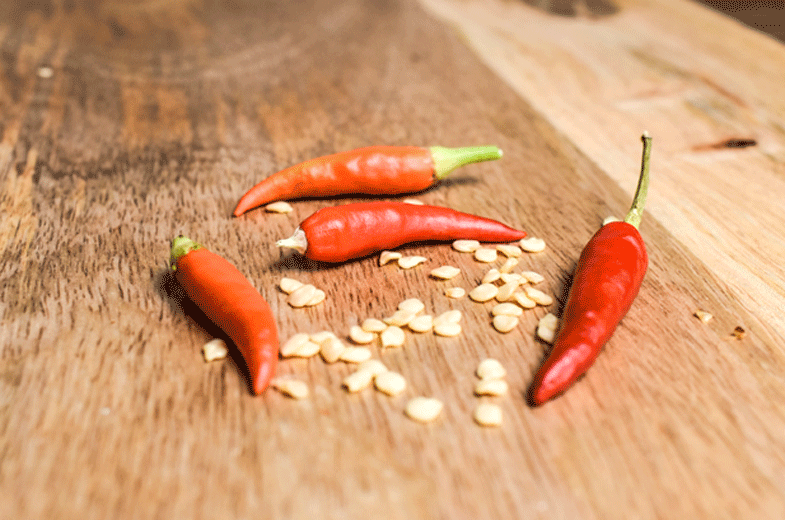
Welcome to growing Chillies
If you’re new to growing chillies, you’re in for an exciting adventure! Growing your own chilli peppers might seem daunting at first, but don’t worry – this guide will walk you through every step. Whether you’re dreaming of adding homegrown Scotch bonnets to your hot sauce, spicing up curries with fresh Thai chillies, or simply wanting to experience the joy of nurturing your very first plant from seed to harvest, this beginner-friendly guide will help you succeed. The satisfaction of harvesting your first homegrown chilli is truly unmatched, and with just a few basic supplies and some patience, you’ll be well on your way to becoming a successful chilli grower.
As a newcomer to chilli growing in the UK, one of the most important lessons is timing. Here’s your first key tip: start in January or February. Why? Our UK climate has a shorter growing season than many chilli varieties are used to, so giving your plants an early start is essential for beginners. Don’t worry if this seems early – there’s a good reason! Chilli plants typically need 6-8 months from seed to harvest, which surprises many first-time growers. Many varieties also need extended warm periods to develop their heat and flavour, so this early start ensures your first crop will have the best chance of success during our summer months. Even the mildest varieties benefit from this extended growing period, as it allows them to develop fuller flavours and more abundant crops.
If your first attempt doesn’t go as planned (which is completely normal when you’re learning!), you’ll have time for a second try while staying on schedule. This timing also lets your young plants develop strong roots in the comfort of your home before they face their first experience with British weather. Remember, every experienced chilli grower started exactly where you are now, and each growing season brings new lessons and discoveries. Think of your first year as an exciting experiment – you’ll learn what works best in your specific growing conditions and which varieties suit your taste and space


 it's essential in dishes like gochujang eomuk bokkeum. Meanwhile, the wrinkled, compact kkwari-gochu (꽈리고추), also known as Shishito, offers a milder heat at 1,000 SHU and features prominently in dishes like
 conditions for developing the Chillies’ distinctive taste. These flakes range in colour from deep burgundy to bright red, with a texture that’s coarser than
  Spicy seafood stew
 Crispy tortillas & cheese
 poblanos to fiery
  Smoked Jalapenos
 the time of the Aztecs. In reality, chipotle peppers are just the smoked and dried versions of the jalapeños, and pre-Columbian Mexico practiced this
 Indonesian fried rice
 Scrambled eggs are often added, either into the rice mix or above it as an extra topping. It is then garlanded with refreshing
 What is it ?
 after the coastal city of
 Homemade Chorizo
 olden times, it was made from pork and seasoned with a mix of various spices, most of which are