
 will also cover what precautions should be taken to protect the young plants against unwanted pests like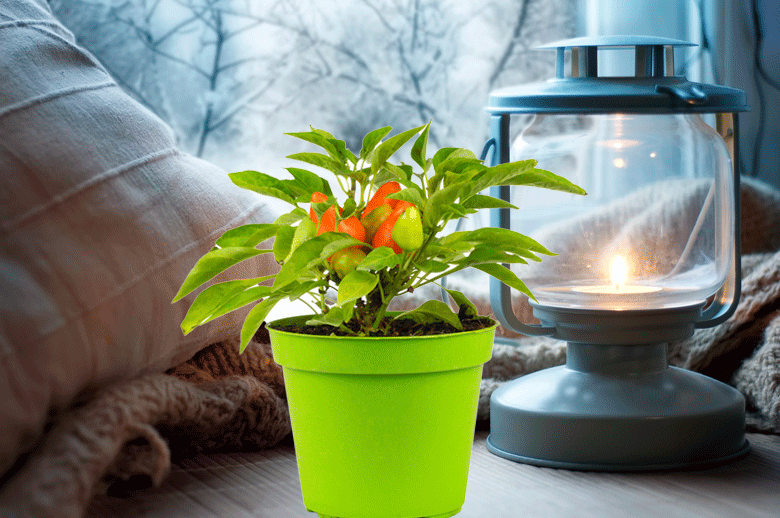
What I am overwintering
While we regard Chillies as annuals in the UK, they are perennials in their natural environments. In these environments, it rarely reaches freezing the way it does here during winter. As a result, most Chillies subjected to the freezing conditions during winter in the United Kingdom will die. Full stop. A few varieties are cold weather resistant (to a certain extent), but none can cope with frost.
So, if we want them (or a selected few at least) to survive wintry conditions, the plants need to be brought indoors or kept in a protected environment outdoors. This process is called overwintering.
This year, I am overwintering twelve plants. Two of these (yellow Scotch bonnets) are in their second overwintering. I overwintered them for the first time last year. The remaining plants are four Satans kisses, an Aji Crystal, an Apache, three Barak Chillies and two unknowns (somehow, I managed to lose their markers). In time, once they flower again, I will attempt to identify them
Usually, I cut plants back for overwintering. I also always keep them in the warmest room in our house, out of direct sunlight. Under most circumstances, this means placing the plants in an area next to our fireplace in our lounge.
While I keep them in the lounge as I usually do, I didn’t prune any of these plants this year, as I might have done in previous years. I took the view that except for the Aji Crystal, my Scotch bonnets, and one bigger Satan’s kiss, my smaller plants could be considered to be ornamentals. They are, on average, only about twelve inches tall. They were also exceptionally pretty Chillies and had aesthetic appeal. With this in mind, I resolved to treat the smaller plants as house plants. For the larger plants, I decided to wait for them to lose their leaves before I pruned them back.
 leaves have developed, the plant will start getting nutrition from

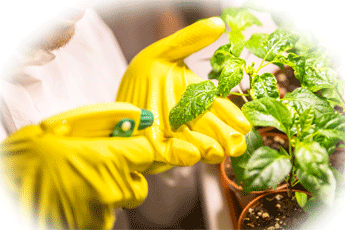
 do this, I poured the solution onto the surface of the mix. The hydrogen peroxide drained through the mix and in the process killed off most of the larvae. By doing this, I hope to have broken the
 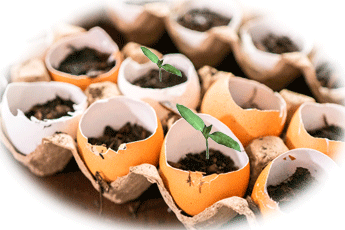 seeds. It consists of seed-starting compost with an NPK of 3.4-1-1.5 and worm castings with an NPK of 1: 0: 0. This is pretty low, but even at these levels, the mix could be higher than it needs to be. The seedlings just don’t need any fertilising at all. They can feed themselves through nutrition stored in the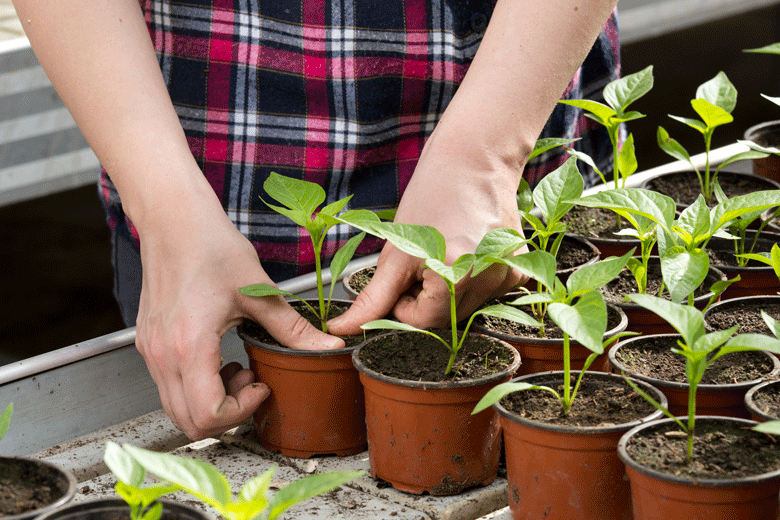
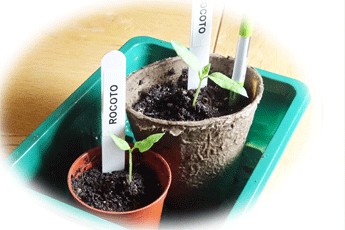
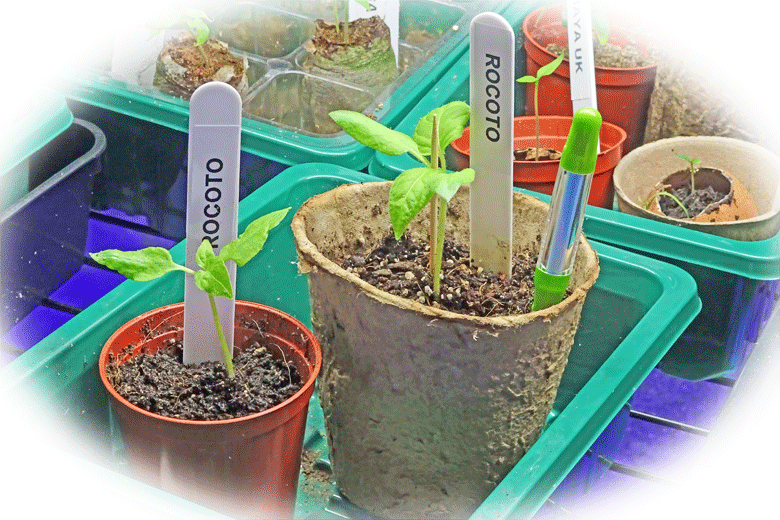
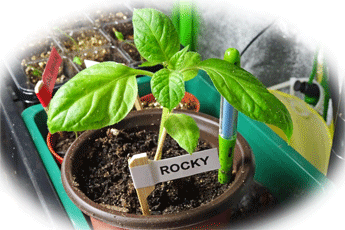
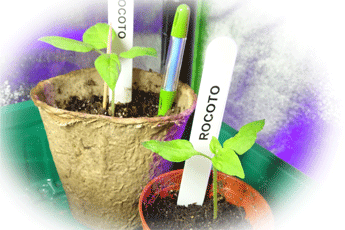 The rest still have a while to go, but I can see these Rocotos being potted on in the next couple of weeks.
 What is scarification?
 r coat. Come spring, when the seed is ready to