

An update on Fungus gnats
In a previous post, I mentioned that I would experiment with hydrogen peroxide to kill off fungus gnats. I have since tried using it, and must say I am “reasonably “impressed”. When I say reasonably impressed, I must qualify that. It definitely works, but maybe just not as well I would have hoped for. No matter how many times I apply it, the gnats might disappear for a while, and then before you know they are back again.
Now believe me, fungus gnats are not my friend by any sense of the imagination. I absolutely detest them. Not only are they bothersome pests, but if they are not brought in check, they can also create massive problems in the health of seedlings. So, there is no leeway here. I will not be happy until I have done all I can to get rid of them.
So again, it was back to the drawing board. I began doing some research to try and figure out why I wasn’t being as successful as I hoped I would be. There had to be answers out there somewhere. Surely!
I didn’t take long to find out that while I had most bases covered, there were a few things I missed. One glaring omission was the dosage of the H202 I had been using. I understood that the 3% hydrogen had to be mixed in the ratio of one-part H202 to four parts water. This was right, but not for the purpose I had used it. It turned out that the one to four ratio should be used for foliar spraying, rather than for a soil drench. I had been using the one to four dilutions for soil drenches. For a soil drench, the ratio should be far stronger. It should be mixed at one-part H202, two parts water. This solution then gets poured on top of the potting soil and is allowed to drain through it
 Comparing fertilisers
 control group, was to get Chilli Focus diluted at 2.5 ml per litre of water. The second set was set to be fed at a dosage of 2ml per litre of water.

 pythium,) it will be too late. Unfortunately, they will die. What’s more – alarmingly so – once pythium makes its appearance, it can rapidly kill off many seedlings in quick succession. This is particularly so if the seedlings share the same source of water.
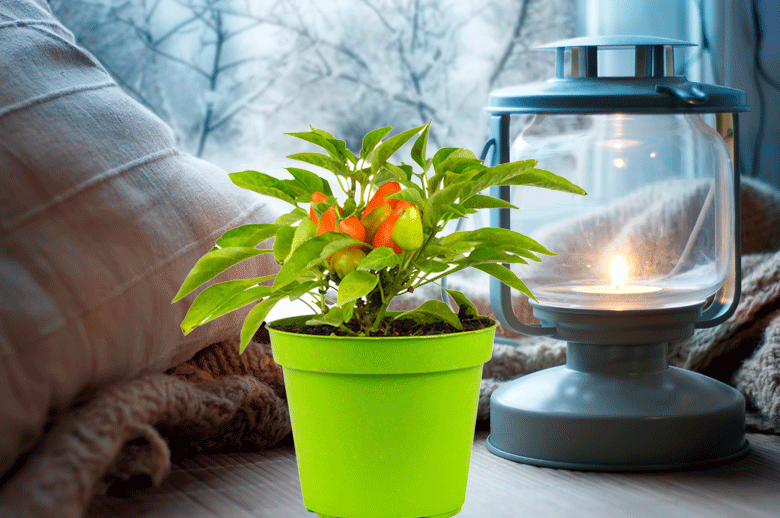
 are in their second overwintering. I overwintered them for the first time last year. The remaining plants are four
 leaves have developed, the plant will start getting nutrition from


 do this, I poured the solution onto the surface of the mix. The hydrogen peroxide drained through the mix and in the process killed off most of the larvae. By doing this, I hope to have broken the life cycle of the fungus gnats. Adults only live for seven days. By killing off the larvae and eggs, I will have reduced their ability to continue multiplying. It is the first step in permanently getting rid of these pests.
 seeds. It consists of seed-starting compost with an NPK of 3.4-1-1.5 and worm castings with an NPK of 1: 0: 0. This is pretty low, but even at these levels, the mix could be higher than it needs to be. The seedlings just don’t need any fertilising at all. They can feed themselves through nutrition stored in the


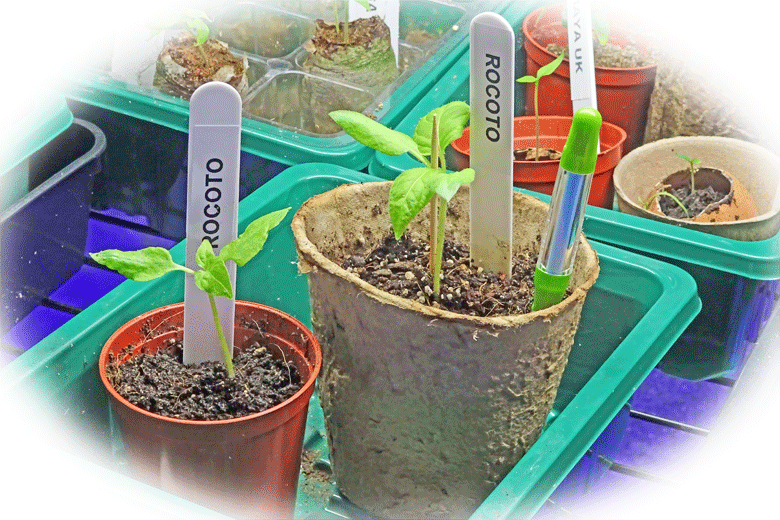
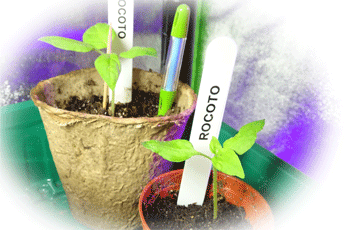 The rest still have a while to go, but I can see these Rocotos being potted on in the next couple of weeks.