Jambalaya

Louisiana Classic

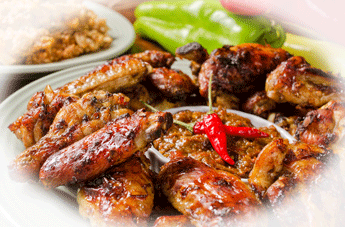
Jambalaya is more than just a dish; it’s a journey through history and culture. This Louisiana classic, known for its bold flavours and hearty ingredients, tells a story with every bite. Rooted in the rich cultural melting pot of Louisiana, jambalaya reflects a blend of French, Spanish, and African influences. The dish’s name and diverse ingredients speak to its origins as a way to bring people together and make the most of available resources. Let’s delve into the fascinating history of jambalaya and discover how it evolved into the beloved dish we savour today.

The history of jambalaya is as rich and varied as its flavour. This beloved dish has its roots in the cultural melting pot of Louisiana, where French, Spanish, and African influences blend seamlessly. The name “jambalaya” is believed to derive from the Provençal word “jambalaia,” meaning a mix or mishmash, which reflectsthe dish’s diverse ingredients. Originally, it was a way to stretch limited resources and feed large families or gatherings. The dish evolved in the 18th century as Spanish settlers tried to recreate paella with local ingredients, leading to the rice-based creation we know today. African slaves added their own touches, such as the “Holy Trinity” of onions, celery, and bell peppers, which are now essential to the dish. Over time, jambalaya has become a symbol of Louisiana’s vibrant culinary heritage, celebrating its multicultural roots.

Only the real key ingredients are just rice, the “Holy Trinity” of onions, celery, and bell peppers, your chosen protein, and spices. That’s where we come in: The Chilli Workshop has got the goods to kick your jambalaya up a notch. Fancy giving it a go? It’s a piece of cake, really! Chuck your veggies in a pan, toss in your meat and seafood , sprinkle some rice and spices, and slosh in the broth. Let it bubble away for a bit. Oh, and don’t forget to give it a breather before dishing up! Serve it up with a side of crusty bread or a green salad for a complete meal. Your friends and family will be asking for seconds before you know it.  So, roll up your sleeves and dive into the joy of making jambalaya!

Read more

Chilli jam recipe

Making spicy jams with Chillies

Top tips for making Chilli jam

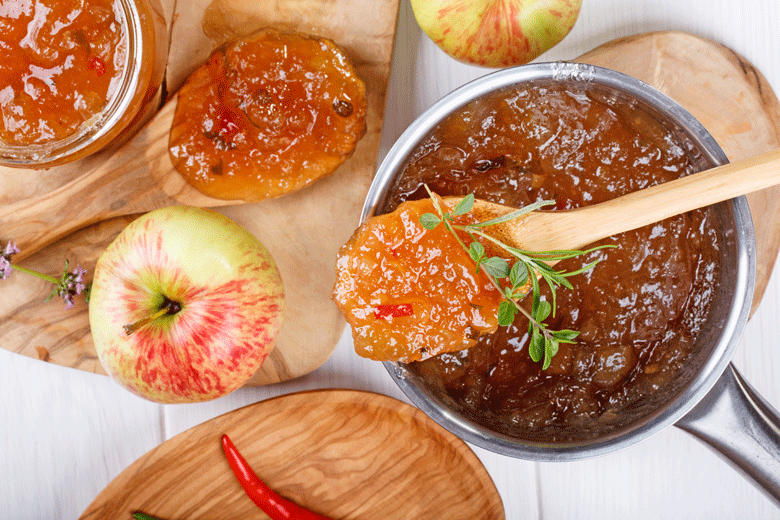
Most jams follow a similar trend. Add two parts of fruit to one part sugar to a pectin rich fruit and then boil it, you get jam.  Most of the time, this works pretty well. However, sometimes not!  To be successful in jam making, there are a few tricks to be aware of, but also you need to be sure that the jam you make are safe. Food safety is paramount

Always ensure that equipment and utensils are washed in warm soapy water. Rinse in fresh water to eliminate any detergent traces, and then allow to air dry. The jars and lids for bottling need to be washed in the same way. The jars should however be dried in an oven at 100 degrees Celsius.  Place the lids in boiling water for at least ten minutes and then allow them to dry. Doing this will reduce the risk of the jam becoming contaminated with unwanted bacteria during bottling.

After that follow these tips and your recipes instructions to get it right every time.

Considerations

1)   The amount of sugar you add is a personal preference. Reducing sugar will result in jam that is less set.

2)  Use a cooking pot with a large surface area. Part of the jam making process is to evaporate liquid out of the fruit to concentrate the flavour. Having a pot with a large surface area will help.

3)   When using fruit  with low pectin levels, you will need to add pectin or use pectin sugar to make an adequately set jam

4)   Slightly under ripe (rather than over ripe) fruit makes better jam because it is more acidic. Acidity is needed for pectin to set,

5)  Some fruit has lower pectin contents than others (the stuff in the fruit that makes jam set once it is boiled). The following list of fruits used to make jams with Chillies shows their various pectin levels

6)  Always gently simmer the fruit being used before adding sugar. Boiling helps release pectin from the fruit. Always dissolve the sugar in the fruit before bringing the jam to the boil to prevent crystallisation

7)  Wash and chop the fruit before boiling it. Mashing the fruit will make the jam smoother

8) Add lemon juice (one to two tablespoons) to increase the acidity of the fruit. Doing this will aid pectin extraction, but also make the jam less sweet. Do this at the start of the cooking

9) Adding a knob of butter to the boiling jam will help reduce any scum that may float to the surface.

And finally

Making Chillies jams is rewarding. Not only do they taste delicious, but they also make excellent gifts because they are unusual.  The same can be said about Chilli chutneys. Both are a great way to make something different for a friend or family member.


Jamaican curry chicken


Jamaican curry chicken
 
Author: 
Recipe type: Curry
Cuisine: Caribbean
Prep time: 
Cook time: 
Total time: 
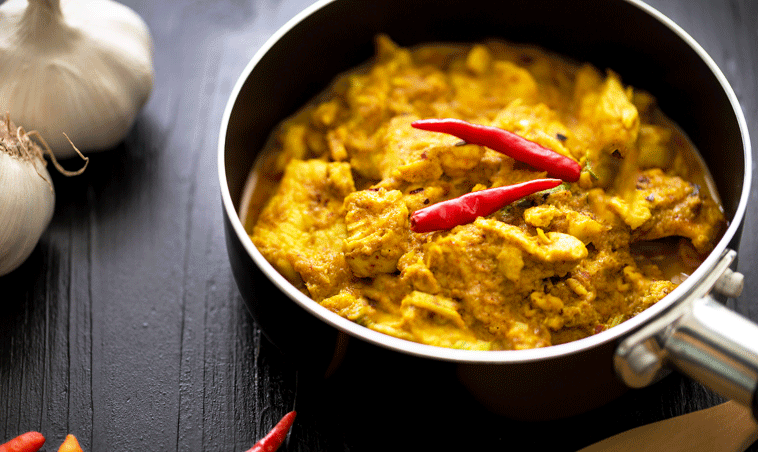
This fantastic curry combines Indian spices with spices more commonly used in the Caribbean, like Pimento and Thyme. The Chillies used to make- Scotch Bonnets - are also different to those used in Indian cooking. The end result is something that will really impress your family and friends. Definitely a dish that will become one of your favourites!
Ingredients
  • Chicken pieces – 0ne kilogram
  • Carrots – two medium (chopped)
  • Potato – one small (chopped)
  • Scotch Bonnet Chilli – one – finely chopped
  • Onion- 0ne medium chopped
  • Ginger – 2 teaspoons
  • Garlic – three cloves (crushed)
  • Fresh thyme – three sprigs
  • Vegetable oil – three tablespoons
  • Pimento (All spice ) berries – five
  • Curry powder – two tablespoons
  • Chicken seasoning – two tablespoons
  • Salt – taste
  • Lemon juice – two tablespoons
Instructions
  1. Cut the chicken into bite size pieces
  2. Mix the curry powder, chicken seasoning, pimento berries, Scotch Bonnets, onion, ginger, garlic , thyme and lemon juice . Coat the chicken pieces in this mixture for an hour
  3. Once marinated remove chicken pieces from the marinade
  4. Heat the oil in a skillet to a medium heat
  5. Add the onions and rest of the ingredients – excluding the thyme
  6. Cook until the onions are starting to become translucent
  7. Add the chicken pieces and cook until browned (Be careful not to burn)
  8. Add the carrot, potatoes, and thyme
  9. Cover the ingredients with water
  10. Cook until the chicken is tender and the gravy has reduced
  11. Serve with cooked pumpkin, rice or Jamaican rice and Peas


Jamaican jerk seasoning

Home | Search Results for 'jam'

Caribbean Jerk Rub

Experience the vibrant soul of Jamaica with this bold and aromatic jerk seasoning that captures the authentic spirit of Caribbean cuisine. This powerhouse blend combines an audacious amount of chilli powder with the warming embrace of traditional Jamaican spices, creating a rub that’s both fiery and flavourful. At its foundation, allspice—known as ‘pimento’ in Jamaica—provides the characteristic earthy notes that define genuine jerk seasoning, whilst ground cinnamon and cloves add deep, aromatic undertones. The generous portions of garlic powder and crumbled thyme leaves create a robust savoury profile, perfectly balanced by the sweetness of brown sugar. Coarsely ground black pepper adds texture and heat, whilst fine sea salt ensures the flavours penetrate deeply into the meat. This potent blend promises to transport your taste buds straight to the smoking jerk pits of Jamaica, delivering that authentic combination of heat, sweetness, and aromatic spice that makes jerk chicken an international favourite.

Jamaican jerk rub
 
Author: 
Recipe type: Powders, rubs and flakes
Cuisine: Jamaican
Prep time: 
Total time: 
Jamaican jerk seasoning is the secret ingredient that will make your next BBQ a huge success. While it goes well with steak and fish, it really shines when used on chicken Simply rub on the seasoning to taste, allow it to rest for about 45 minutes ( remember to pierce the skin so it can penetrate into the meat) and then grill slowly l. Finejoy
Ingredients
  • Chilli powder – one cup ( see note *)
  • Black pepper – 6 tablespoons ( coarsely ground)
  • Dried thyme leaves – 7 tablespoons ( crumbled)
  • Ground cinnamon – 4 tablespoons
  • Fine sea salt – 1.5 cups
  • Brown sugar – ¾ cup
  • Garlic powder – 0ne cup
  • Ground cloves – 2 tablespoons
  • Allspice– 5 tablespoons
Instructions
  1. Combine all ingredients in a blender or a bowl. Mix until well combined
  2. Place in an airtight container
  3. Sprinkle on food to be grilled ( chicken, fish, steak etc.) according to tase.( This is about a teaspoon per serving )
  4. Allow resting for about 45 minutes before grilling
Notes
* In Jamaica Scotch bonnet chillies are used to make this rub. Scoth bonnet chiili powder has not been specified in this recipe as Scotch bonnet it may be more difficult to get. IF using Scotch bonnet powder cut down the quantity to about quarter of that specified . This however is very much dependant on the specific powder being used as they can vary very much. The type specified in this recipe is based on a cayenne chilli powder type strength

This is a dry rub that you can use if you don't have the time to marinate your chicken etc for the true Jamican jerk experience. While it is very good , If you have the time, the recipe for Jamaican jerk chicken should definitely be tried

Keywords: Jamican jerk seasoning


Jerk recipes


Chilli jams and chutneys

Home | Search Results for 'jam'

Chilli jams and chutneys

That bit of pizzazz

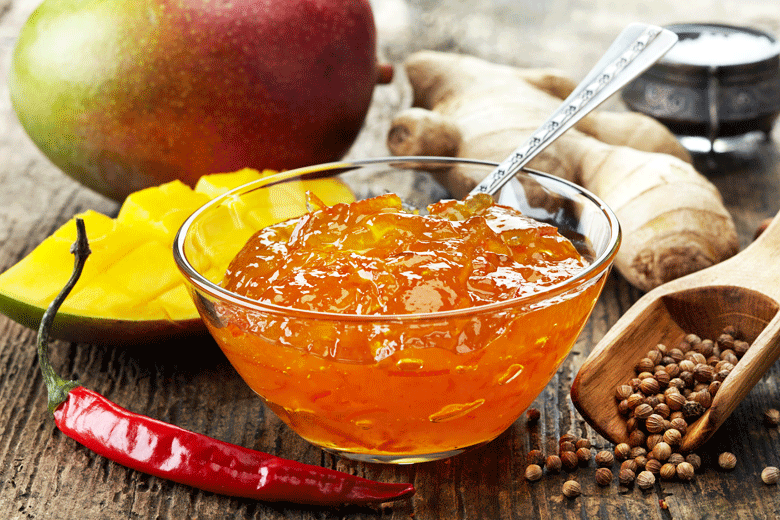
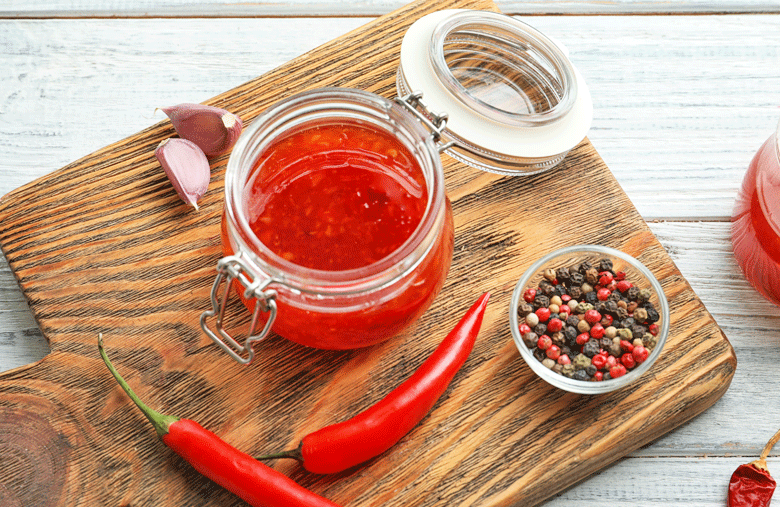
If you find the food you are serving is bland, Chilli jams and chutneys will come to your rescue. They give your dish that little bit of pizzazz that will take it to the next level.  While normally served with toast or bread, Chilli jams are surprisingly good when served with fatty meats like duck or pork. A little goes a far way! Making Chilli chutneys, marmalades and jams at home is as simple as 1,2.3. Using basic canning techniques and food safety will mean you can produce batches that will keep for some time. Happy canning.

Recipes. Chilli jams & chutneys

Tomato and Chilli jam – UK

Sweet & Vibrant Red Pepper Chilli Jam

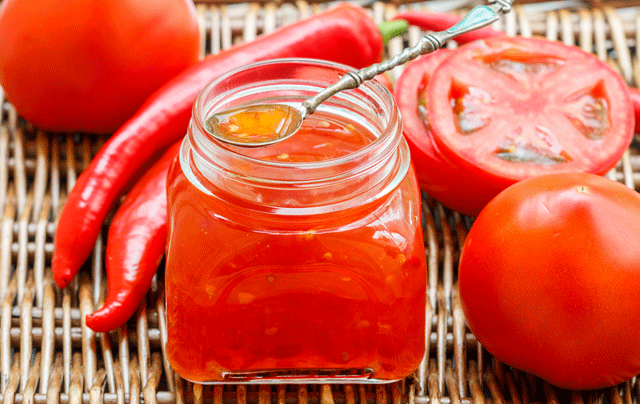
Elevate your condiment game with this vibrant red pepper and chilli jam that balances the natural sweetness of bell peppers with the moderate heat of jalapeños. This stunning preserve combines fresh peppers with bright cherry tomatoes and aromatic ginger and garlic, creating a versatile jam that’s both sophisticated and bold. Perfect for glazing meats, mixing into marinades, or simply spreading on crusty bread with cheese, this jewel-toned creation brings professional flair to your table. While the cooking process transforms these simple ingredients into a glossy, complexly flavored jam, the aroma alone will have you dreaming up new ways to use it. Store it in sterilized jars and watch it disappear!


Tomato and Chilli jam
Nutrition Information
  • Serving size: 100g
  • Calories: 122
  • Fat: < 0.5g
  • Saturated fat: < 0.1g
  • Carbohydrates: 30g
  • Sugar: 30g
  • Sodium: 0.62g
  • Fiber: < 0.5g
  • Protein: 1.3g
Recipe type: Chilli Jams
Cuisine: English
Prep time: 
Cook time: 
Total time: 
Somehow the thought of the Chili being an ingredient in a jam just doesn’t sound like it belongs. Once again the versatility of the Chilli never ceases to amaze and surprise us. It not only belongs but adds an element of flavour that defies the imagination. Modern day cooking challenges everything and it is not unheard of to find Chilli combined with things like bacon, mangoes and grapes. These wonderful combinations just need to be tasted! This recipe is a more traditional approach to a Chilli jam but it still bursts with flavour
Ingredients
  • Red bell peppers - 8
  • Red Chillies – 10 Jalapeños or similar -chopped
  • Fresh root ginger – 3 inches - grated
  • Garlic cloves – 8 cloves, peeled and chopped
  • Cherry tomatoes – 1 - 400 gram can
  • Caster sugar -750 grams (one pound 10.5 ounces)
  • Red wine vinegar -1 cup
Instructions
  1. Remove stem, white pith and seeds from bell peppers. Cut into bit size pieces
  2. Add peppers,chillies ginger and garlic above to the tomatoes in a heavy based pot.
  3. Add vinegar and slowly incorporate sugar, stirring all the time until well mixed
  4. Bring to the boil and then turn down heat. Allow to simmer, with occasional stirring, for 45 minutes to an hour
  5. Towards the end of the cooking cycle it should start thickening so is vigilant. At this point stir regularly to prevent it catching.
  6. Once cooked. Allow to cool slightly and ladle into sterilized jars. Seal
Notes
Keywords: Tomato and chilli jam

Link button

Jerk chicken – Jamaica

Home | Search Results for 'jam'

 
Jamaican Jerk Chicken
 
Author: 
Nutrition Information
  • Serving size: 100g
  • Calories: 170 kcal
  • Fat: 11g
  • Saturated fat: 3.5
  • Carbohydrates: 2.1
  • Sugar: 1.1
  • Sodium: 0.35g
  • Fiber: 0.6g
  • Protein: 15g
Recipe type: Grilled Chicken
Cuisine: Jamaican
Prep time: 
Cook time: 
Total time: 
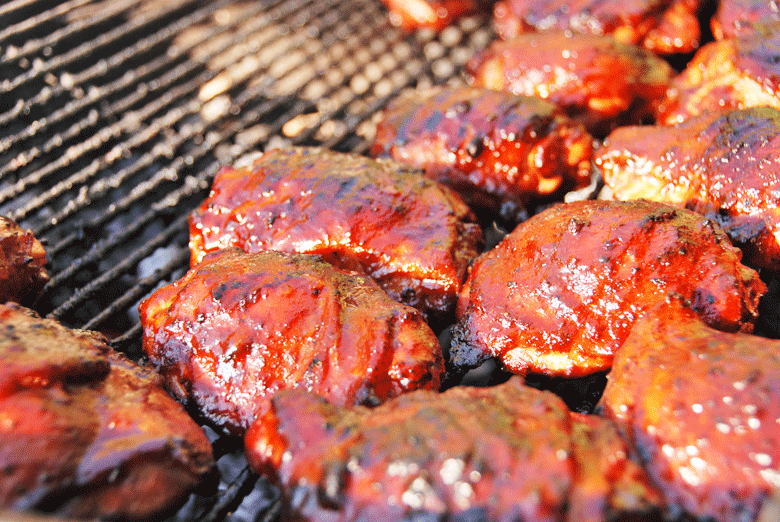
When Columbus went in search of spices in India, instead of finding the East, he landed in the West Indies. It was here that he first encountered the Chilli. Jamaica is, of course, a country that is part of this region. Thus, not surprising that this dish has its home in a part of the world that had a role in getting the Chilli to where it is today. Whilst tasting great if done in the oven, for the real thing, barbequing is the only way to go. The spiciness and tanginess of the marinated chicken is elevated by the smokiness and crispness that only this method of cooking can provide. Fulljoy !
Ingredients
Meat
  • Chicken (spatchcocked) – 3 to 4 pounds (see note)
For the marinade
  • Honey - 2 teaspoons
  • Dried coconut- 2 tablespoons
  • Vinegar (malt or white) - ½ cup
  • ½ cup lime juice
  • Dark rum – 2 tablespoons
  • Fresh Scotch bonnet Chillies – 2 chopped (see note)
  • 0nion – 1 medium, roughly chopped
  • Spring onion/ scallions - 4, chopped
  • Vegetable oil - 2 tablespoons
  • Ground allspice - 2 teaspoons
  • Ground cinnamon - 2 teaspoons
  • Ground nutmeg - 2 teaspoons
  • Ground ginger - 2 teaspoons
Seasoning
  • Dried thyme – 1 tablespoon
  • Ground black pepper – 2 teaspoons
  • Dried crushed red Chilli - ½ teaspoon
  • Garlic powder - 1 tablespoon
  • Onion powder - 2 teaspoons
  • Salt – ½ to 1 teaspoon
Instructions
  1. Combine all the ingredients lists under “for the marinade” and blend until a smooth paste.
  2. Pierce the chicken all over with a large fork to allow the marinade to be easily absorbed into the meat.
  3. Place chicken in a large zip-lock bag (Alternatively use non- metallic bowl covered with cling film) and pour in the blended marinade. Allow to marinate for 4 to 8 hours
  4. Once marinated remove chicken from the bag. Sprinkle ingredients listed under “Seasoning” over the skin of the bird, taking care to ensure that it is well distributed in equal proportions over the full area.
  5. Place remaining marinade in a pot and bring to the boil.
  6. Light barbeque and wait until coals are light grey. Grill slowly, ensuring that the fire does not get too hot (the oil can cause the fire to flare up and burn the chicken) If the fire flares up, move to a cooler part of the grill. Baste the chicken with remaining marinade. Ensure that it is well cooked through-out and nicely char-grilled on the outside. Remove from flames. Cover with aluminium foil and allow resting for 10 minutes. Serve
  7. Can also be cooked in the oven in the kitchen at a temperature of 180 degrees Celsius for 75 to 90 minutes. (Use recommended cooking time for the weight of chicken being cooked) Barbequing is best though!
Notes
Habanero Chillies can also be used

Spatchcocking is to cut the chicken in half so it lies flat on the grill

Traditionally served with Caribbean black beans and rice, but also great with a green salad


This recipe yields 4 - 5 portions

Keywords: Jamaican Jerk Chicken

Image credits

Recipe: Image by William Lind from Pixabay

Front page : stu_spivack /CC by 2.0 / via Flikr

Image credit:BBQ Junkie / CC BY NC 2.0 / via Flikr


🌶️ The Cold-Weather Kitchen: Hearty Chilli Recipes.

Wholesome and warming

As the days grow shorter and the crisp air of November settles in, there’s a natural shift in our kitchens. Out go the light summer salads, and in come the hearty, soul-warming dishes that chase away the chill. And what better ingredient to bring that much-needed warmth and a kick of flavour than our beloved chillies?

For the UK home cook, this time of year is all about celebrating the fiery potential of the peppers you can reliably pick up on your weekly shop. Forget the ultra-exotic varieties—we’re focusing on the readily available staples that truly excel in rich, comforting winter meals.

The UK Chilli Line-Up: From Mild to Mighty

When you’re shopping for chillies in a British supermarket, you’ll generally find a few key players. Here is a quick guide to what you’re using and how they best fit into a winter warmer:

Chilli Variety Heat Level (Typical) Best Use for Cold-Weather Dishes
Generic Red/Green Medium (variable) Versatile all-rounder; perfect in Chilli Con Carne and stews.
Bird’s Eye Hot Curries, marinades, or anything needing a sharp, clean heat.
Jalapeño Mild-Medium Nachos, stuffing (poppers), pickles, or adding a fresh, green kick to sauces.
Dried/Powdered Varies (Cayenne/Chipotle) Essential for building deep, smoky flavour bases in slow-cooked meals.

So grab your shopping list and prepare to turn up the heat in your kitchen. We’ve compiled the ultimate guide to using these familiar peppers in the cosiest, most comforting dishes imaginable. Let’s explore how the humble chilli becomes the hero of the Cold-Weather Kitchen.

Read more

How chillies are biologically classified

Image of mixed chillies

Home | Search Results for 'jam'

Chilli varieties from A to Z. Biological classification

No listing of Chillies from A to Z would be complete unless more information was given regarding their biological classification. Having an idea of how they are classified makes the subject even more intriguing, and fills in missing pieces.

All Chillies belong to the Solanaceae family. Solanaceae includes other vegetables like eggplants, tomatoes, potatoes, tomatillos, and goji berries. From this broad classification, they are broken down into the Genus Capsicum L -pepper. According to Wikipedia, it is believed that the name Capsicum may have originated from the Latin "capsa", which means to box (perhaps referring to the shape of the pods). Another possibility is that the name is derived from the Greek "kapto", which means "to gulp." The reference to pepper is thought to refer to the similarity in pungency that this Genus has with black pepper (Piper nigrum ). There is, course, no biological connection between black pepper (or Sichuan pepper) for that matter) and this Genus.

From here, things start becoming more specific. Capsicum is broken down into the particular species that the Chillies fall under. While there may be as many as thirty species, many of these grow only in the wild.  Five species have been domesticated and are more well-known

Domesticated Chilli species
Capsicum annuum

It gets its name from "annual ", which implies that a plant only has one season from seed and then dies. This is, in fact, not the case.  If not subjected to very cold conditions, these plants can survive for many seasons and turn into large perennial bushes.

Capsicum annuum includes Chillies like Bell peppers, Jalapenos, Poblanos, Cayenne, Hidalgo, Hungarian Hot wax, Chiltepin, Serrano, Paprika, Anaheim, Ancho, Banana pepper, Chile de árbol, Thai birds-eye  and many more.

The Scoville rating for this species starts at the very bottom, with Bell peppers having a SHU of zero.  Mild Chillies like Cubanelles, Poblanos, Anaheims and Jalapenos rank below 8000 SHU.  The medium heat C annuums like Cayennes and Serranos have a heat rating of between 10000 and 50000 SHU. One of the hottest is the Thai birds-eye, with a Schoville heat rating of about 100000 SHU. Their flower corollas are typically white. A few varieties have purple flowers.

These Chillies are used in various dishes, including stuffed peppers, pickled Chillies, curry, moles, spicy stews, and many hot sauces.

Capsicum baccatum

The name means "berry-like", which generally describes the shape of Chillies that come from this species. It has its origins in an area (Peru and the Andean region of South America) hypothesised to be the birthplace of the first Chillies in this world. Aji Chillies, which generally come from this species, have been consumed in this region for thousands of years.

Chillies that fall into this species include Aji Amarillo (Peru's most popular Chilli),  Aji Limone ( also known as the lemon drop Chilli), Pitanga ( starfish Chilli of Brazil), Bishops Crown, Aji Andean,  Aji Ayucullo (Peru), Aji Benito (Bolivia), Aji Catatenango ( El Salvador),  Aji Brown (Peru) and the White wax Chilli 

The Scoville rating for this species of Chilli tends to range between 30000 and 50000 SHU, with certain exceptions.  One exception to this is the  Sweet piquanté pepper from South Africa with a SHU of 1177. The Aji Amarillo falls in the 30000 to 50000 SHU category, as does the Aji Limone.  The flowers petals  (corollas) are coloured between white to cream. Their corollas have dark green, yellow or brown spots at the base. This species is probably the easiest to identify by this trait

In cooking, B baccatum is used in ceviche (Aji Amarillo and Aji Limone), grilled chicken (Aji Amarillo)fish stews (Dedo De Moca in Brazil) and many other dishes.  The Aji Amarillo, by far the chefs choice in Peru, is used to make dishes like Pollo a la Brasa with Aji Verde , Cau Cau, Causa and Papas ala Huancaina (layered potatoes with a creamy spicy sauce).

Capsicum_chinense

The naming of this species came from the mistaken belief of a Dutch botanist that it originated in China. He came to this conclusion of noticing how extensively it was used in Chinese Cuisine. In fact, it was introduced to China by European explorers. Chinense is a very hot species of Chilli that has its origins in the Andean region. It is known as a Habanero type Chilli and includes.

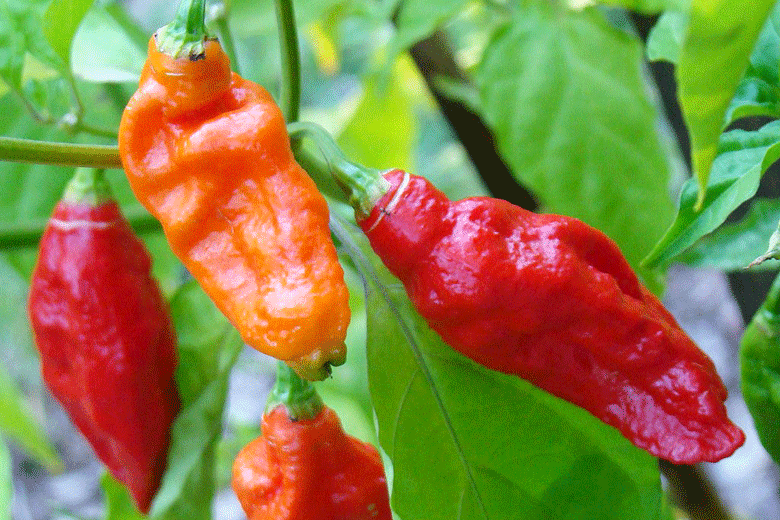
Scotch bonnets, Adjumas & Madame Jeanette's (from Suriname), 7 pot cultivars, Trinidad Scorpions, Bhut Jolokia (Ghost peppers), Datils (from Florida) and Fatalli (from South central Africa)

The Scoville rating of these chillies is more than 100000 SHU. The Carolina Reaper , which is officially the hottest Chilli in the world, is a cultivar of this species. It is a cross between the a Soufriere pepper from the Carribean and the Naga viper Chilli from Pakistan. It rates a whopping 1,569,300 on average SHU on the Scoville rating scale. Less pungent cultivars like the Habenero and Scotch bonnet are in the 100000 to 350 000 SHU range. Certainly hot Chillies indeed! Their flower corollas (petals) are white. The anthers and filaments are purple.

These Chillies are typically used in dishes from the Caribbean, like Jamaican Jerk chicken, Mexican dishes like Salsas, and very hot   hot curries like Vindaloo and Phall (one of the hottest curries in the world).

Capsicum_frutescens

Frutescens means "Shrub Like". These pungent small Chillies that grow skyward facing are prized in China , Africa, Indonesia, Brazil, the Philippines and the USA for their fantastic flavour. They are commonly used to make hot sauces like Tabasco, Piri- Piri, etc. They have their origin in South America, but were widely distributed by the Portuguese around the world.

Chillies in this species include African devils, Malaguetas, Cabai Rawit, Siling labuyo, Xiaomila_pepper and Tabasco.

These Chillies are in the comfortable range for most Chilli Lovers. In common with Chillies, like the Cayenne, Thai birds eye (which is often mistakenly thought to belong to this species) and the Serrano from  Capsicum Annuum, these Chillies are widely used in everyday cuisine . They are in the 30000 to 175000 SHU range .  This makes them pungent, but pleasantly so .  African Devils have a SHU oF between 500000 and 175000 SHu.  Malaguetas are in the 60000 to 100000 SHU range, and the Siling labuyo  80000 to 100000 SHU . Tabasco chillies, which are used to make the sauce of the same name, have a  relatively mild SHU of between 30000 and 50000 SHU.

The flowers have green/ white corollas with no spots. They have purple anthers and filaments

Besides their use in hot sauces, this species is used to add flavour to many dishes and pungency to dishes like  Piri Piri Chicken ( Portugal, Brazil and Southern Africa, Moqueca de peixe com camarão ( Brazil),  Sambals (Indonesia),  Chilli vinegar ( Philippines) and a host of other dishes from around the world.

Capsicum pubescens

Chillies that have been used for thousands of years in the Andean region. Traces of its use go back more than 7000 years, with traces of its use found in the Guitarrero Cave. Its name means "hairy" in reference to the hairs in its leaves. In Peru and Ecuador, it is known as a Rocotto, Locoto in Bolivia and Argentina, and as the Manzano pepper (apple pepper) in Mexico.

Rocotos are very hot with a Scoville rating of between 100000 and 300000 SHU.  These are a variety of cultivars, including the brown rocoto, rocoto Canario ( yellow), Rocoto de Seda, Rocoto Largo san Isidro, Rocoto Roja (red), orange rocoto, and the white rocoto .  These cultivars come in various shapes, including resembling apples and pears. It is called a Manzano in Mexico because this means apple in Spanish. Their flowers are purple.

These Chillies are essential in Peruvian cooking and the most important ingredient in the Bolivian sauce Llajua. It is also used as an ingredient in ceviche and Rellenos. Its thick walls make it excellent for stuffing  Its flavour is described as being similar to a Bell pepper, with the juiciness of a tomato, but with a very pungent heat.  When cut in half, it actually even looks like a tomato with black seeds.


Final thoughts.

This post  on Chilli varieties from A to Z carries information on all the most known domesticated Chillies. Because many Chillies are covered , it is only possible to give an idea of where they are used in cooking. Their uses, of course, are far more comprehensive than that. There are hundreds of Chillies in these species, so there are probably a hundred ways to use them.

All these species have characteristics that help identify them. For a more in-depth look at these distinguishing characteristics, visit the Chili Pepper project website.

Image Credits

Maja Dumat / CC by 2.0/  via Flikr

Mark Levisay / CC BY 2.0 / via Flikr

Mark Levisay / CC BY 2.0/ via Flikr

manual m.v  / CC BY - SA2.0 /  via Flikr

Adam mckenna,  / CC BY-SA 3.0  /via Wikimedia Commons

The original uploader was JoeCarrasco at English Wikipedia./ CC BY-SA 3.0 / via Wikimedia Commons.

Daniel Risacher, / CC BY-SA 3.0,/ via Wikimedia Commons

Delicious ways to use Chilli oil

Home | Search Results for 'jam'

Uses for  Chilli oil

Chilli oil is very versatile. It is one of those ingredients you can have in your kitchen that will never go to waste.  A splash here, a bit there and the next minute, you have a whole lot of flavour.

So just how would you use your home-made Chilli oils?

Stir-fries

Use a combination of Chilli oil and other vegetable oils to stir-fry your vegetables, noodles, rice, meat, poultry or other stir-fry ingredients. Great examples of stir fries which can be made with Chilli oil include Nasi Goreng from Indonesia and spicy fried rice from China. If you like it really spicy, use the Chilli oil on its own.  Add a sprinkling of Chilli flakes for even more flavour

Eggs and omelettes.

Fry eggs in Chilli oil for a spicy breakfast. Your favourite omelette can be given a nice bite by adding some Chilli oil to butter when making them.  Spicy breakfast omelettes are a great breakfast or brunch dish that can be made using this idea.

Curries

Fry your onions, garlic, ginger, spices and onions in Chilli oil to create a fantastic  base for your favourite curry. For added flavour, fry fresh Chillies at the same time before adding your tomatoes and  other ingredients.

Seafood

Chilli oil and seafood are one of those perfect  combinations.  Use it to make dishes like Peri - Peri  prawns, scallops and fried fish. it is also great with squid, raw fish, and spicy seafood  soup an stews  like Malysian Laksa, Brazilian Moqueca de peixe com camarão and Tom yum goong from Thailand.

Pasta and noodles

Nothing benefits more from a splash of Chilli oil than pasta and noodles. Add Chilli oil to freshly cooked spaghetti or rice noodles. It can be eaten just as it is, but adding a bit of cheese like parmesan will give it even more flavour.  Noodles are also great stir-fried in Chilli oils. Add a dash to Lasagne, Penne and Pappardelle . Finally, don't forget to use it to make your Arrabbiata sauce. 

Pizzas, calzones and Georgian khatchapuri.

Cheese and Chilli oil are a fantastic match. Nothing beats a dash of Chilli oil on a combination of cheese and pastry. This combination is great on its own, but you can also combine it with other ingredients to add even more flavour. Try Chilli oil on this great tasting vegetarian pizza or on Khatchapuri.

Finally

Probably the best use for using your home-made Chilli oils is wherever it takes your fancy. Why not consider making spicy mayonnaise, salad dressings or adding it to marinades? Other ideas include frying tomatoes for breakfast, making Shakshuka and roasting stuffed peppers with it.   There are no boundaries where your imagination can take you!

Link button


Click here    to find out about preserving Chillies in oil